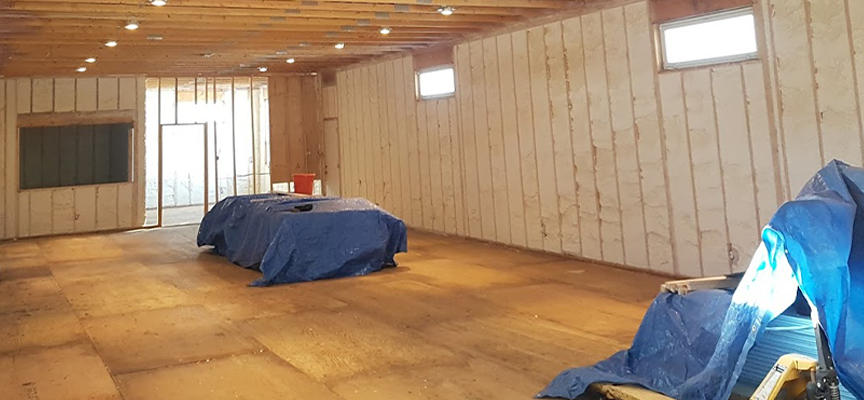
Industrial facilities across Edmonton operate in some of the most demanding temperature conditions in Canada, with long, frigid winters and hot, dry summers that push buildings and equipment to their limits.
Managing these extremes takes constant energy, and every wasted BTU or kilowatt-hour translates directly into higher operating costs. This is why more local facility managers are treating industrial insulation not as a one-time construction expense, but as a long-term investment that safeguards profitability.
When done properly, industrial insulation creates a tightly sealed, energy-efficient envelope that stabilizes interior conditions, eases strain on HVAC systems, and delivers measurable savings year after year.
By understanding the financial mechanics behind insulation upgrades and aligning them with operational priorities, Edmonton businesses can unlock substantial ROI, often within just a few years, while creating safer, more productive work environments.
Why Edmonton’s Climate Makes Industrial Insulation Critically Important
Edmonton is in a region with cold winters (typically well below freezing) and warm summers. This climate leads to large thermal loads and energy expenditures:
- Facilities must heat large interiors through bitter winters, which can drive up natural gas or other fuel bills.
- In summer, cooling or ventilating can also be costly.
- Temperature swings stress building envelopes and mechanical systems.
- Code requirements and energy efficiency regulations are increasingly strict, and energy costs are rising.
In this environment, good insulation that delivers air sealing, limits heat transfer, and is properly installed becomes one of the most dependable ways to reduce operating costs for industrial facilities.
Key Drivers Of ROI For Industrial Insulation
To assess ROI, one must consider initial costs, ongoing savings, maintenance, lifespan, and other indirect benefits. Below are the primary drivers affecting ROI in Edmonton’s industrial context.
1. Energy Savings
The biggest and most direct return comes from reduced energy consumption. When walls, roofs, ceilings, pipe systems, or ducts are insulated properly, heat or cold retention is much improved, so the facility needs less heating fuel or electricity.
Mechanical insulation (for piping, boilers, ducts) can show fast payback. For example, U.S. studies show ROI of 6-24 months for mechanical insulation in industrial settings, due to fuel savings.
2. Reduced Maintenance And Equipment Life Extension
- Insulation helps reduce condensation, which can cause corrosion under insulation (CUI), a big cost in cold climates. Well-insulated mechanical systems suffer less wear.
- HVAC systems run less frequently (fewer cycles), which lowers maintenance and component replacement costs.
- Temperature uniformity helps avoid stress in building structures and equipment.
3. Regulatory & Incentive Value
- Energy efficiency rebates, grants or tax credits may be available for industrial energy efficiency upgrades. These reduce the effective cost and help accelerate ROI.
- Compliance with local or provincial energy codes helps avoid penalties and can enhance eligibility for certain contracts or certifications.
4. Operational/Process Performance
- Many industrial processes require tight temperature or humidity control; insulation improves stability, which can improve yield, reduce waste, or avoid shutdowns.
- Worker comfort improves, which can impact productivity and reduce heating or cooling adjustments.
5. Long Lifespan & Durability
Quality insulation systems can last decades with minimal performance degradation, especially spray foam systems that are durable and form airtight seals. Over time, the savings accumulate. For example, properly maintained mechanical insulation may last 20-30 years.
Typical ROI / Payback Periods In Industrial Settings
While each facility is unique, here are rough benchmarks and case studies, especially applicable to Edmonton or similar cold-climate industrial zones.
| Application | Approx. Payback Period* |
| Mechanical insulation (boilers, piping, uninsulated steam lines) | 6-24 months in many cases (as seen in LMCT reports) |
| Roof or wall insulation upgrade / adding spray foam over inadequately insulated metal buildings | 1-3 years, depending on energy costs and usage |
| Full building envelope upgrade (walls, ceiling, roof) | Usually 2-5 years, given high heating/ventilation loads |
| New build insulated to high standards (spray foam, proper air sealing) | Lower incremental cost, faster break-even; 2-4 years typical in high-usage buildings |
*These are estimates. Payback depends on fuel (gas/electricity) costs, building size, existing insulation condition, usage patterns, and installation quality.
Best Practices To Maximize ROI
You can invest, but to ensure you get maximum return, certain practices must be rigorously followed.
Proper Design & Material Selection
- Choose insulation materials suited for your application: for example, closed-cell spray foam or rigid insulation on exterior walls and roof deck; open-cell may work in interior cavities when moisture is carefully managed.
- Use products and application methods that provide air sealing, reduce leak paths. The airtightness often contributes more to savings than raw insulating value alone.
Quality Installation
- Spray foam must be correctly applied (proper mixing, thickness, coverage), especially ensuring stud cavities are exposed rather than injection into closed cavities.
- Any gaps, thin spots, or poor sealing reduce performance dramatically.
Regular Maintenance & Inspections
- Mechanical insulation should be inspected for damage (moisture, compression, degradation) and replaced where needed.
- Roof/wall systems should be checked for weather damage or deterioration.
- Ensuring that insulation remains intact, dry, and sealed yields consistent long-term savings.
Accounting For Lifecycle Costs
- Upfront cost is just one part. When comparing insulation options, factor in energy cost escalation, maintenance, replacement, and possible downtime or process loss.
- Use energy audits or professional assessments to model realistic savings.
Costs Vs Benefits: What A Facility Manager Should Expect
Let’s break down what one might expect in terms of cost components and returns.
Initial Investment: Includes material, labour, scaffolding/access, vapour or air barrier components, and possibly removing older insulation.
Energy Savings: Monthly or seasonal savings in heating (winter) and cooling (summer), often visible on utility bills within the first year.
Other Savings: Lower maintenance, fewer repairs (HVAC, mechanical), avoided corrosion, improved process stability.
ROI Timeline: For many industrial clients in Edmonton, a well-executed insulation upgrade can pay for itself in 1-3 years, with continued savings beyond.
Why Spray Foam Is A Strong Option for Industrial Insulation
Classic Spray Foam specializes in spray foam insulation, which brings specific advantages in the industrial sector in Edmonton:
- Air Sealing + Thermal Barrier: Spray foam fills gaps, seals joints and penetrations, reducing air leakage.
- Durability & Longevity: Spray foam remains stable over long periods when applied correctly.
- Versatility: Can be applied to walls, ceilings, roof panels, and irregular surfaces.
- Winter Performance: In Edmonton’s cold winters, keeping the building envelope tight dramatically cuts heating load.
Classic Spray Foam offers commercial and industrial insulation services in Edmonton and surrounding areas, including new builds, renovations, and custom industrial projects.
Risks Or Cost Pitfalls To Watch Out For
While the upside is large, some pitfalls can reduce ROI if not managed properly:
Improper installation: thin layers, missed cold spots, poor sealing. Undercutting specifications reduces performance.
Moisture intrusion: Spray foam is not “waterproof.” If moisture gets behind or under insulation, it can damage the structure or reduce insulation effectiveness.
Choice of materials: Using lower-density/ inappropriate foam in places exposed to moisture or structural stresses can lead to failures.
Neglecting maintenance: Even durable systems degrade or get damaged; inspections are essential.
Estimated ROI Scenario: Edmonton Industrial Building
Here’s a hypothetical example illustrating how ROI might play out:
Facility: 50,000 ft² metal roof warehouse, poorly insulated roof and walls, moderate process heat and HVAC usage, high heating cost in winter.
Upgrade: Add closed-cell spray foam to roof panels, walls; insulate/seal all ductwork and mechanical piping.
Cost: Let’s say CAD $150,000 installed.
Savings: Energy cost reduction of 30–40% annually, yielding say CAD $50,000/year savings in gas & electricity (heating, cooling). Additional savings via reduced maintenance, longer equipment life, etc.
Payback period: ~3 years or less. After that, the facility realizes full savings for many years. Over 10 years, total savings could reach CAD $400,000 or more, minus any minor maintenance.
About Classic Spray Foam
Classic Spray Foam is a locally operated insulation company based in Edmonton. We specialize in spray foam insulation services for industrial, commercial, and custom-built facilities. Our expert team handles everything from new builds and metal buildings to retrofits and complex structural situations.
We pride ourselves on high performance, energy efficiency, and delivering excellent long-term value for our clients through durable, airtight insulation solutions.
Contact us today for a free, no-obligation quote to see how we can help improve your facility’s performance and cut your energy costs long-term.