Closed Cell vs Open Cell Spray Foam Insulation: Which One Should You Choose for Your Home?
June 11, 2026
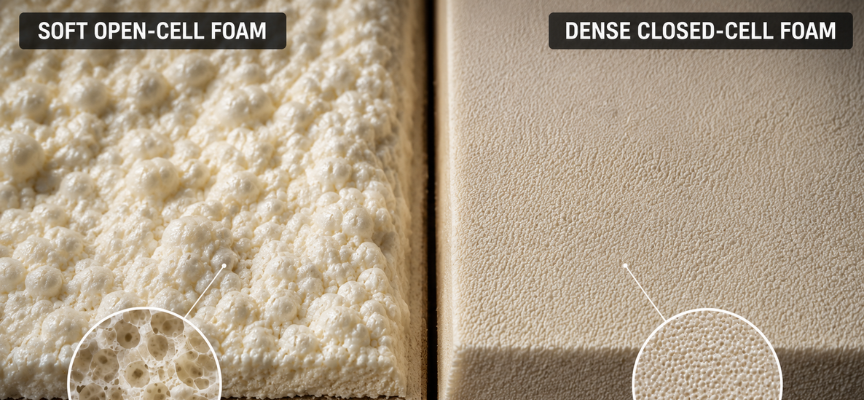
Choosing between closed cell and open cell spray foam insulation can feel overwhelming. Many homeowners want better comfort and efficiency, but are unsure which option delivers real results.
If you are planning professional spray foam insulation services in Edmonton, understanding the difference between these two types is critical. Each one serves a different purpose. Making the wrong choice can affect performance and long-term value.
This guide explains both options clearly so you can choose with confidence.
What Is Spray Foam Insulation and How Does It Work?
Spray foam insulation is applied as a liquid that expands quickly. It fills gaps, cracks, and cavities completely. This creates a continuous airtight seal.
This airtight seal reduces air movement inside your home. It helps maintain stable indoor temperatures and improves overall comfort. Unlike traditional insulation, spray foam does not leave gaps.
There are two main types used in homes. These are open cell and closed cell foam. Both perform well, but they behave differently.
What Is Open Cell Spray Foam Insulation?
Key Characteristics
Open cell spray foam is a light-density material. It expands significantly after application. This allows it to fill irregular spaces completely.
Its structure contains open pockets filled with air. This makes it softer and more flexible compared to closed cell foam.
Where Open Cell Works Best
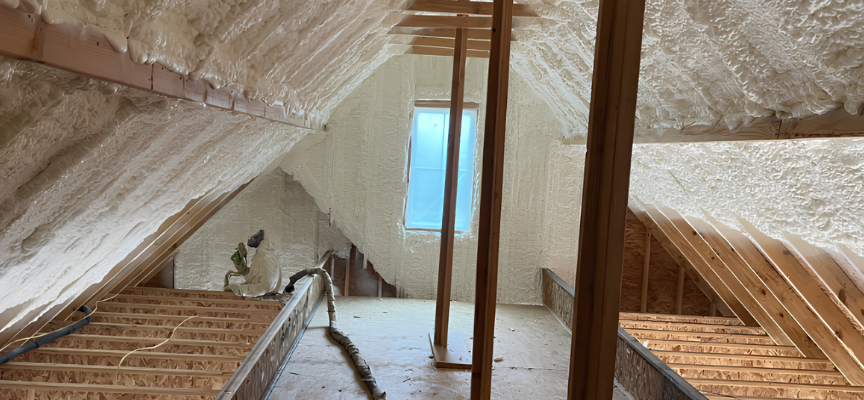
Open cell foam is ideal for attics and interior walls. It performs well in large cavities where full expansion is needed. It is also suitable for ceilings and rooflines.
Many homeowners use it when upgrading attic insulation or interior comfort.
Advantages of Open Cell Foam
Open cell foam provides excellent coverage due to its expansion. It can reach areas that other insulation types may miss.
It is also a practical option when working within a defined budget. However, it is best used in controlled indoor environments rather than high-demand areas.
What Is Closed Cell Spray Foam Insulation?
Key Characteristics
Closed cell spray foam is dense and rigid. Its structure is tightly packed, which gives it strength and durability.
It does not expand as much as open cell foam. However, it delivers higher insulation performance in thinner layers.
Where Closed Cell Works Best
Closed cell foam is commonly used in basements, crawl spaces, and exterior walls. It performs well in areas exposed to temperature extremes.
It is also preferred for spaces where thickness is limited, but performance must remain high.
Advantages of Closed Cell Foam
Closed cell foam has a higher R-value per inch. This means better thermal resistance with less material.
It also adds structural strength to walls and surfaces. This makes it a strong choice for long-term performance and durability.
Closed Cell vs Open Cell Spray Foam Insulation: Key Differences
Understanding the differences helps avoid costly mistakes.
Open cell foam expands more and fills large spaces easily. Closed cell foam is more compact and provides stronger insulation in tight areas.
Closed cell foam offers higher thermal resistance. This makes it better for areas that lose heat quickly. Open cell foam works better for interior coverage.
Cost also varies. Open cell foam is less expensive upfront. Closed cell foam costs more but delivers stronger long-term performance.
Another difference is structural strength. Closed cell foam reinforces surfaces, while open cell foam remains soft and flexible.
Which One Should You Choose for Your Home?
Choosing the right option depends on your home and goals.
Choose Open Cell If
You are insulating attics or interior walls. You need full cavity coverage. You want a more cost-conscious option.
Open cell works well when space is not limited, and expansion is beneficial.
Choose Closed Cell If
You need higher insulation performance in smaller spaces. You are insulating basements or exterior walls. You want long-term durability.
Closed cell is ideal for areas exposed to outdoor temperature changes.
Many modern homes use both types together. This allows each area to perform at its best.
Cost Considerations for Spray Foam Insulation
Cost plays a major role in decision-making. Open cell foam is less expensive due to its lower density and material usage.
Closed cell foam costs more because it delivers higher performance and durability. It uses more material per inch and requires precise application.
However, long-term value should always be considered. Better insulation can reduce heating and cooling demands.
Improving insulation is one of the most effective ways to reduce energy consumption in your home.
Homes with better insulation often experience more stable indoor temperatures. This leads to improved comfort and efficiency.
Best Applications for Edmonton Homes
Edmonton homes face extreme seasonal temperature changes. Winters are cold and long, while summers can be warm.
Closed cell foam performs well in basements and exterior walls. These areas require strong insulation to reduce heat loss.
Open cell foam works best in attics and interior walls. It fills large spaces and improves overall comfort.
The Government of Alberta highlights that a well-insulated home can significantly improve comfort and reduce energy use.
Common Mistakes Homeowners Make When Choosing Spray Foam
Many homeowners focus only on price. This often leads to poor performance over time. Choosing cheaper insulation for high-demand areas can reduce effectiveness.
Another mistake is using one type everywhere. Not all areas of a home require the same insulation.
Some also underestimate the importance of professional installation. Poor application can leave gaps and reduce efficiency.
Proper installation is essential to achieve the full benefits of insulation upgrades.
Why Hiring Professional Insulation Contractors Matters
Professional insulation contractors understand how each foam type works. They assess your home and recommend the right solution.
They ensure proper thickness, coverage, and curing. This results in consistent performance across all areas.
Working with experienced professionals also prevents costly mistakes. It ensures your insulation performs as expected for years.
Final Thoughts: Making the Right Choice for Your Home
Closed cell vs open cell spray foam insulation is not about choosing the better product. It is about choosing the right product for the right space.
Open cell foam is ideal for interior coverage and expansion. Closed cell foam provides higher performance in demanding areas.
A well-planned insulation strategy often combines both. This ensures every part of your home performs efficiently.
Making the right decision improves comfort, efficiency, and long-term value.
About Us
At Classic Spray Foam, we specialize in high-performance spray foam insulation for residential and commercial projects. Our team focuses on precision, correct material selection, and long-term results.
We work closely with homeowners and builders to deliver insulation solutions that match each project’s needs. If you are planning an upgrade, contact us to get expert guidance.