Choosing the Right Commercial Insulation to Match Your Building’s Needs
September 24, 2026
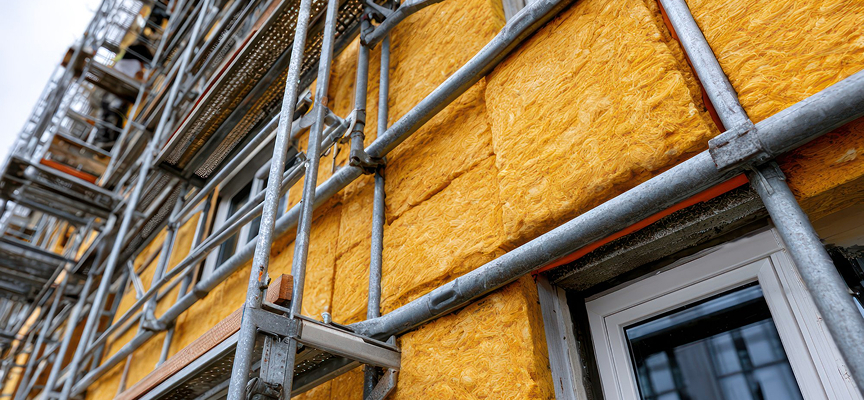
Many commercial insulation projects begin with the exact same question:
“Which material gives me the highest R-value?“
But that is rarely the question that leads to a smart business decision. Your building type, daily occupancy, moisture exposure, and real-world operations will always have a far greater impact on your long-term performance than a number on a product brochure.
This guide cuts through the fluff to show you how to choose commercial insulation that actually fits your building’s specific daily demands. (And if you’re managing an office environment where occupant comfort dictates your productivity, be sure to explore our dedicated guide to Providing Dependable Office Insulation for Ultimate Commercial Comfort).
Every Structure Has a Different Daily Grind
It’s easy to treat commercial insulation like a one-size-fits-all commodity. In reality, the right solution depends entirely on what happens inside your walls Monday through Friday.
An office packed with employees has completely different requirements tha a warehouse with overhead doors cycling open all day long. A manufacturing facility generating massive heat from heavy machinery faces structural challenges that a retail showroom never will. Even two buildings with the identical square footage can perform like night and day because occupancy, humidity, and ventilation change how heat moves through the space.
That’s why selecting insulation should never begin with a product brochure. It should begin with the building itself.
Before picking a material, look at the hard facts:
- How the space is abused and utilized each day
- How consistent your indoor temperature needs to be
- Your actual exposure to moisture and high humidity
- The raw construction of your walls, roofs, and ceilings
- Real-world energy goals versus upfront budget constraints
Office Buildings: Comfort Drives the Bottom Line
People notice an uncomfortable workspace long before they ever look at a high energy bill.
Freezing boardrooms, sweltering corner offices, and constant thermostat wars all point to the exact same issue. Your conditioned air isn’t staying where it belongs. While the HVAC system usually catches the blame for these complaints, insulation frequently determines whether that equipment even stands a fighting chance in the first place.
Office environments require performance that goes beyond basic temperature control. Employees expect consistent workspaces, businesses want predictable overhead, and property owners want satisfied tenants who actually renew their leases.
Your insulation strategy should hit multiple targets at once:
- Lock in consistent temperatures across every occupied square foot
- Cut down unnecessary HVAC runtime and premature equipment wear
- Deaden sound between busy offices and private meeting rooms
- Seal the building envelope to stop costly air leaks
- Keep indoor air quality clean by blocking uncontrolled outside drafts
Warehouses: Durability Outweights Thermal Fluff
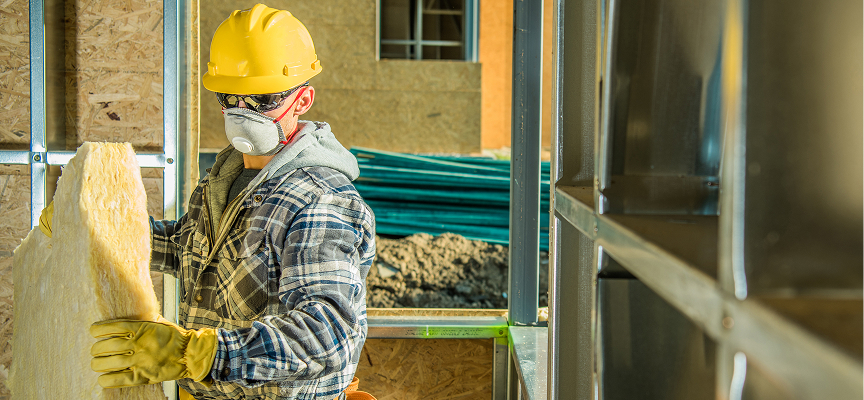
Warehouses present a completely different beast for temperature control.
Massive overhead doors open and close repeatedly, letting out conditioned air by the truckload. High ceilings allow heat to pool uselessly near the roof in the winter, while expansive metal walls turn the space into an oven during the summer. Without a specific strategy, keeping a stable temperature becomes incredibly difficult and expensive.
Many owners focus strictly on hitting a specific R-value number on paper. That approach completely misses the bigger picture.
Air leakage around loading docks, roof penetrations, and structural wall joints often drains more cash than a lack of raw insulation. If outside air moves freely through the building envelope, your heating and cooling systems are forced to work overtime just to keep up.
The right commercial insulation controls heat transfer while physically stopping unwanted air movement. That combination stabilizes your energy performance, stops condensation in its tracks, and protects your inventory, your equipment, and your crew.
Manufacturing Facilities: Basic Thermal Control Isn’t Enough
Manufacturing environments place some of the absolute toughest demands on a commercial building. Heat-generating machinery, process moisture, heavy ventilation needs, and continuous 24/7 operations all take a massive toll on how insulation performs over time.
In these facilities, insulation is about much more than just chipping away at utility bills. It is your primary tool for stabilizing the indoor conditions that keep production moving, protect sensitive equipment, and stop condensation from rotting your structural steel or mechanical systems. Once moisture gets trapped inside a building assembly, the repair bills will dwarf the original cost of just doing it right the first time.
For a manufacturing setup, you have to balance multiple priorities at once:
- Muzzling heat transfer around intense production zones
- Killing moisture migration inside your walls and roof assemblies
- Locking down consistent indoor temperatures for quality control
- Taking the brutal, unnecessary strain off your hardworking HVAC units
- Extending the long-term lifespan of your entire building envelope
The right insulation gives you a structure that performs reliably, even when you’re running it at maximum capacity.
Retail Buildings: Customer Comfort Dictates Your Sales
Retail spaces have zero margin for error when it comes to temperature swings.
Customers expect a comfortable shopping environment from the exact second they step through your doors. Your staff spends entire shifts inside the building, and your bottom line depends on keeping operating costs predictable year-round.
But retail layouts are inherently inefficient. Large storefront windows, automatic entrance doors, and wide-open floor plans make it incredibly tough to maintain a stable indoor temperature. Without the right insulation barrier, your heating and cooling systems are forced to constantly fight against massive heat gain in the summer and freezing drafts in the winter.
A smart commercial insulation strategy changes the game for retail spaces:
- Holds a steady, comfortable temperature across all customer zones
- Kills off the biting drafts near entrances and large glass window systems
- Drives down seasonal heating and cooling spikes
- Keeps both your staff and your customers comfortable enough to stay longer
- Levels out HVAC performance so your equipment stops short-cycling
Comfort drives the customer experience. Energy efficiency protects your profit margins. Good insulation delivers both.
According to Natural Resources Canada (NRCan), improving a building’s envelope by reducing air leakage and increasing thermal performance is one of the most effective ways to improve energy efficiency and reduce operating costs.
Why Closed-Cell Spray Foam Fits So Many Commercial Footprints
No single insulation product is a magic bullet for every single building. However, closed-cell spray foam solves several major structural headaches that commercial properties face every day.
Traditional insulation materials often leave small, hidden gaps around mechanical penetrations or irregular framing. Closed-cell spray foam operates differently. It expands instantly upon application to create a completely seamless, continuous insulation layer that fills those gaps while sealing off the primary sources of unwanted air movement. That unique combination makes it incredibly effective for buildings with complex roof profiles, exposed structural steel, heavy pipe penetrations, or irregular envelopes.
The raw advantages speak for themselves:
- High thermal performance with a massive R-value packed into every inch
- Superior air-sealing capabilities that physically stop drafts
- High moisture resistance that acts as a built-in vapor barrier to prevent condensation
- Long-term dimensional stability—it won’t sag, settle, or pull away over time
- Aggressive adhesion that locks onto almost any commercial building material
According to the National Research Council of Canada’s National Building Code, controlling both thermal resistance and air leakage is critical if you want to improve a building’s energy performance and durability. Choosing a material that hammers both factors at the same time is simply smart business.
Look Beyond the Upfront Invoice
Most commercial insulation projects start with one basic question:
“How much is this going to cost today?”
That’s a completely fair question, but it shouldn’t be the only one driving your choice.
The cheapest insulation option up front rarely translates to the cheapest building to actually own and operate over time.
Heating and cooling expenses never stop. Moisture damage, premature equipment failure, and erratic indoor climates create hidden operating costs that can easily erase whatever small savings you got by picking a subpar insulation system on day one.
Before you sign off on a material, evaluate the complete picture:
- How the building is actually going to be utilized day in and day out
- Your real-world, long-term energy performance benchmarks
- The building’s actual exposure to moisture and humidity
- The expected lifespan of the insulation material itself
- What your future maintenance costs will look like if the material fails
Commercial insulation should protect and support your facility for decades, not just shave a few bucks off today’s project invoice.
The Bottom Line
Every commercial building operates differently, and your insulation strategy should reflect that reality. An office, a warehouse, a factory, and a retail store all place completely unique stresses on the building envelope. Getting the right fit means understanding those specific demands long before you ever pick a material.
At Classic Spray Foam, we help commercial property owners choose insulation solutions that actually align with their building’s purpose, performance goals, and long-term operating realities.
Whether you’re breaking ground on new construction or upgrading a facility that’s been taking a beating for years, our team can recommend a system built to protect your comfort, your energy efficiency, and your investment. Contact Us to talk about your project.